Site Record
Metadata
Site# |
169 |
Site Name |
Portland Rolling Mills |
Description |
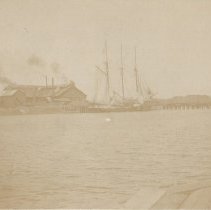
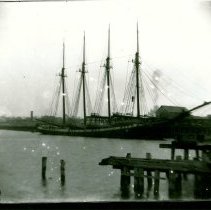
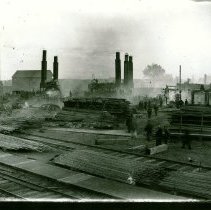
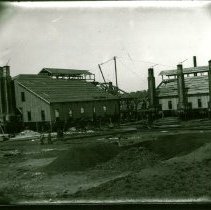
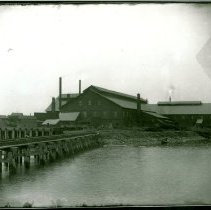
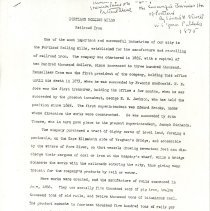
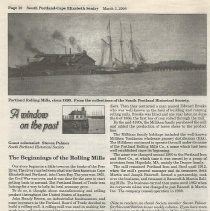
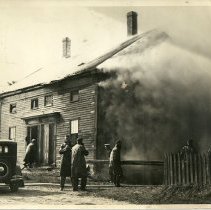
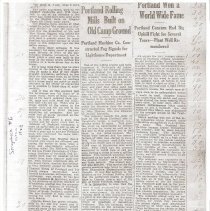
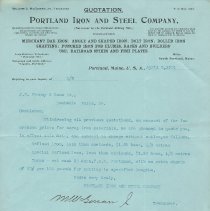
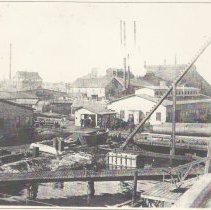
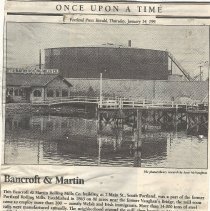
The idea to establish a rolling mill for the manufacture of bar stock iron started during the Civil War. When the war was over, John Bundy Brown and other investors from the Portland Board of Trade purchased 85 acres in Ligonia, Cape Elizabeth [now called South Portland]; the site had previously been site of the Island Trotting Park in the 1850s and then home to a training camp for Civil War volunteer infantry companies during the Civil War (known as Camp Abraham Lincoln and, later, Camp Berry). The investors formed Portland Rolling Mills Co. and hired Edward Brooks, who was well-known in the steel rolling mills field. The first bars of iron came through on June 6, 1866. In 1873, a group of investors incorporated as Ligonia Iron Works and acquired the company with capital stock of $1 million. The corporators were Israel Washburn, Jr., C.K. Green, John B. Brown, Joshua W. Waterhouse, Charles E. Jose, Dennis W. Clark, Henry M. Payson, Samuel E. Spring, Horatio N. Jose, George E.B. Jackson, James S. Marrett, and Hiram Fairbanks. In 1880, Ligonia Iron Works appeared to be floundering. Operations ceased and restarted. On November 10, 1881, the real estate, machinery, fixtures and tools of the company were sold at public auction; Horatio N. Jose was the high bidder at $60,000. In the mid-1880s, the Milliken family purchased the rolling mill. Around 1900, the company name changed to Portland Iron and Steel Co. after it was purchased by a group of investors led by the Draper family. In 1912, the company name changed to Bancroft & Martin Rolling Mills when it was acquired by Seth Martin and Joseph Bancroft (these men had been working as the company's general manager and treasurer). In 1962, the company changed its name to Bancroft & Martin, Inc. In 1989, the business ceased operation. |